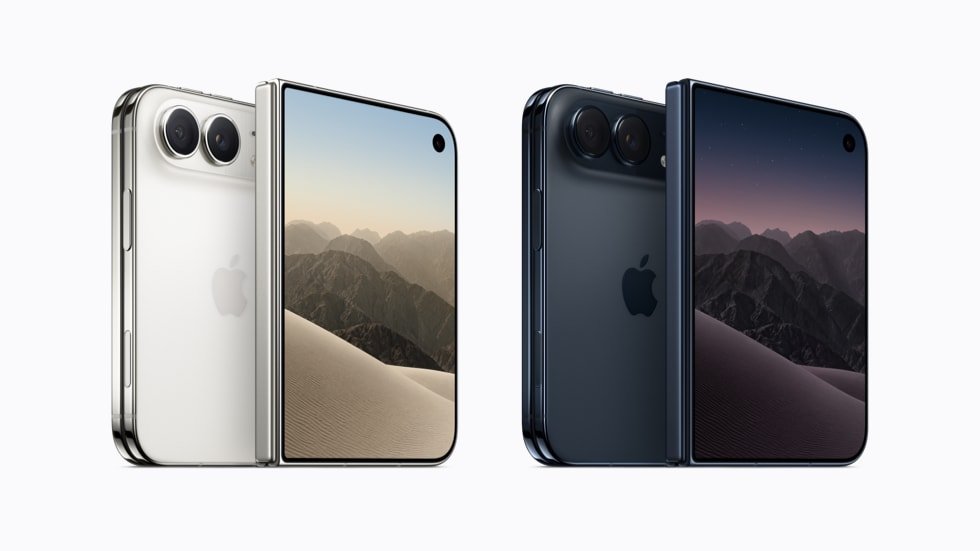
Quick answer: Most people should buy the iPhone 18 Pro, not the iPhone Duo. The Duo is Apple’s most interesting iPhone in years, but at $1,999 it costs $800 more than the 18 Pro and makes real trade-offs in cameras, Face ID, weight, and first-generation risk. Buy the Duo only if you already know you will use its 7.6-inch folding screen for multitasking, reading, video, or work.
If you are choosing between Apple’s new foldable and the regular Pro models, the decision is less about raw speed and more about how you use your phone. All three use the A20 Pro chip. The Duo spends its extra money on the folding hardware and larger canvas. The Pro models spend more of their design budget on cameras, battery, and the familiar iPhone experience.
iPhone Duo vs iPhone 18 Pro: the fast comparison
| Feature | iPhone Duo | iPhone 18 Pro | iPhone 18 Pro Max |
|---|---|---|---|
| Starting price | $1,999 | $1,199 | $1,299 |
| Display | 5.4-inch outer + 7.6-inch folding inner | 6.3-inch | 6.9-inch |
| Chip | A20 Pro | A20 Pro | A20 Pro |
| Rear cameras | 48MP Main + 48MP Ultra Wide | 48MP Main + 48MP Ultra Wide + 48MP Telephoto | 48MP Main + 48MP Ultra Wide + 48MP Telephoto |
| Zoom | 2x optical-quality | Up to 8x optical-quality | Up to 8x optical-quality |
| Biometrics | Touch ID | Face ID | Face ID |
| Typical use | Up to 24 hours | Up to 24 hours | Up to 30 hours |
| Weight | 254g | 211g | 249g |
| Preorder date | October 16 | September 12 | September 12 |
| Release date | October 23 | September 18 | September 18 |
Dabeast take: The iPhone 18 Pro is the value pick. The Pro Max is the battery and big-screen pick. The Duo is the “I want this form factor” pick.
What the extra $800 actually buys you on the iPhone Duo
The reason to buy the Duo is simple: the screen. Closed, it gives you a 5.4-inch outer display. Open it and you get a 7.6-inch inner display, the largest Apple has put on an iPhone. Both screens support ProMotion up to 120Hz, Always-On display, and up to 3,000 nits of outdoor brightness.
The larger inner screen also changes what iOS can do. Apple has added Split View for two apps side by side, the ability to open two windows from the same app, saved app pairs, and layouts that react as the phone folds. Apple says apps including Netflix, Zoom, and Slack are already being adapted for the Duo. Apple Pencil USB-C support is also coming later this year.
This is the one area where the Duo does something the 18 Pro simply cannot copy. If you often bounce between Safari and Messages, compare products in two browser windows, read documents, watch video while messaging, or want something closer to a pocketable mini tablet, the Duo has a real use case.
What you give up compared with the iPhone 18 Pro
The Duo is not a more expensive iPhone 18 Pro. It is a different product with compromises.
The camera system is clearly weaker
The Duo has a 48MP Main camera and a 48MP Ultra Wide camera. Its Main camera can provide 2x optical-quality zoom, but there is no dedicated telephoto camera.
The iPhone 18 Pro adds a 48MP Telephoto camera with up to 8x optical-quality zoom, variable aperture on the Main camera, Pro controls, ProRAW, ProRes RAW, spatial photo and video support, and LiDAR. If camera quality is one of the main reasons you buy a Pro iPhone, the 18 Pro or Pro Max is the safer choice.
The foldable design does give the Duo some fun camera tricks. You can use the outer screen as a preview for the person being photographed, take selfies with the rear cameras, prop the phone up without a tripod, and use Apple’s new Duo-specific shooting modes. Those are clever, but they do not replace the Pro’s stronger lens system.
You lose Face ID
The Duo uses Touch ID in the side button. The 18 Pro and Pro Max keep Face ID. This is not automatically a downgrade for everyone, but it is a meaningful change if Face ID is part of how you unlock your phone, approve purchases, and sign in to apps every day.
It is heavier than the regular Pro
The Duo weighs 254 grams. The iPhone 18 Pro weighs 211 grams, while the Pro Max is 249 grams. So the Duo is actually slightly heavier than the Pro Max even though its outer display is much smaller when closed.
Battery life: the Pro Max still wins
Apple rates the Duo for up to 24 hours of typical mixed use when the inner and outer displays are used equally. For video playback, Apple quotes up to 31 hours on the inner display or up to 44 hours on the outer display.
The iPhone 18 Pro is rated for up to 24 hours of typical use and up to 36 hours of video playback. The Pro Max goes further at up to 30 hours of typical use and 45 hours of video playback.
The Duo can reach 50 percent charge in around 20 minutes with a compatible wired charger. Apple says the 18 Pro can reach 50 percent in around 15 minutes.
If maximum battery life is your priority, the Pro Max remains the obvious choice.
The first-generation question matters
The iPhone Duo is Apple’s first foldable iPhone. Apple has put serious engineering into the hinge, titanium frame, inner display, IP68 water and dust resistance, and a nano-texture finish designed to reduce glare and make the crease less visible.
That does not remove the normal risk of buying a first-generation product. Long-term hinge wear, inner-screen durability, repair costs, case options, app behavior, and real-world battery life cannot be fully judged from launch-day demos.
The practical buyer questions are straightforward: Is the $1,999 price worth it? How durable will the inner screen be after years of use? Are the camera compromises too big? And will carrier offers make the price easier to justify?
If you keep your phones for four to six years, waiting for full reviews before preordering the Duo is sensible. You are not losing anything by waiting because Duo preorders do not open until October 16.
Who should buy the iPhone Duo?
- You genuinely want a foldable, not just the newest iPhone.
- You will use Split View and the 7.6-inch inner screen regularly.
- You want a phone that can replace some light iPad use.
- You read, watch video, compare products, work in documents, or multitask heavily on your phone.
- You are comfortable paying $1,999 for a first-generation device.
- You can live without Face ID and a dedicated telephoto camera.
Buy the Duo for the form factor. If the folding screen does not immediately solve a problem for you, the extra $800 is hard to justify.
Who should buy the iPhone 18 Pro?
- You want the best balance of price, camera quality, performance, and size.
- You care about zoom, photography, video, ProRAW, or ProRes.
- You prefer Face ID and the familiar one-screen iPhone design.
- You want the same A20 Pro performance for much less money.
- You want your phone on September 18 instead of waiting until late October.
For most buyers, this is the one we would choose.
If you are already planning to preorder, our iPhone 18 Pro preorder guide breaks down current pricing, storage, carrier offers, delivery timing, and Pro vs Pro Max.
What about the iPhone 18 Pro Max?
The Pro Max is the middle ground if you want a large display without moving to a foldable. It starts at $1,299, only $100 above the 18 Pro and $700 below the Duo. It also has the same Pro camera system and the best battery life of the three.
If your main reason for considering the Duo is simply “I want a bigger screen,” buy the Pro Max. The Duo only makes more sense when you specifically want the folding experience and multitasking features.
Preorder timing and what we would do
The iPhone 18 Pro and Pro Max are available to preorder now, with release on September 18. The iPhone Duo does not open for preorder until October 16 and launches October 23.
That gap is useful. We would not rush into the Duo today even if you already think you want one. Use the next month to watch full reviews, durability testing, carrier offers, case availability, and real-world app support.
If the Duo still looks worth $1,999 after that, then it is probably the right product for you. If you find yourself trying to talk yourself into the fold, buy the 18 Pro or Pro Max instead.
Dabeast verdict
Best for most people: iPhone 18 Pro. It gives you the same A20 Pro platform, a stronger camera system, Face ID, faster charging, lower weight, and an $800 lower starting price.
Best for battery and a large traditional screen: iPhone 18 Pro Max. It costs only $100 more than the regular Pro and still sits $700 below the Duo.
Best for early adopters and heavy multitaskers: iPhone Duo. Its 7.6-inch folding display and new multitasking features are genuinely different. Just make sure those features are worth the price and the first-generation trade-offs to you.
Frequently asked questions
Is the iPhone Duo worth $1,999?
For most buyers, no. The iPhone 18 Pro is $800 cheaper and has the stronger camera system. The Duo becomes worth considering if you will regularly use its folding 7.6-inch display and multitasking features.
Does the iPhone Duo have Face ID?
No. The iPhone Duo uses Touch ID built into the side button.
Does the iPhone Duo have a telephoto camera?
No dedicated telephoto camera. Its 48MP Main camera provides 2x optical-quality zoom. The iPhone 18 Pro and Pro Max have a dedicated 48MP Telephoto camera and up to 8x optical-quality zoom.
Does the iPhone Duo support Apple Pencil?
Not at launch. Apple says support for Apple Pencil (USB-C) is coming later this year.
When can you preorder the iPhone Duo?
Preorders open October 16, 2026 at 5 a.m. Pacific Time. Availability begins October 23.
Should I wait for iPhone Duo reviews before buying?
Yes, especially if you keep phones for several years. The Duo is a first-generation foldable, and long-term durability, app support, battery behavior, and repair experience will be clearer after reviewers spend more time with it.